SWK Ghana

Agribusiness Summit 2026 · Event report

We came to build from the ground up.

On Saturday 7 November 2026, young people, farmers, founders and partners met in Accra for SWK Ghana's first in-person Summit. They heard from people who run agribusinesses, mapped businesses of their own, and left with a next step. This is what happened.

  • Saturday, 7 November 2026 · 9:00 AM to 2:00 PM
  • The GracedLife Leadership Centre, Ashaley Botwe, Accra
  • Theme: From the Ground Up · free to attend
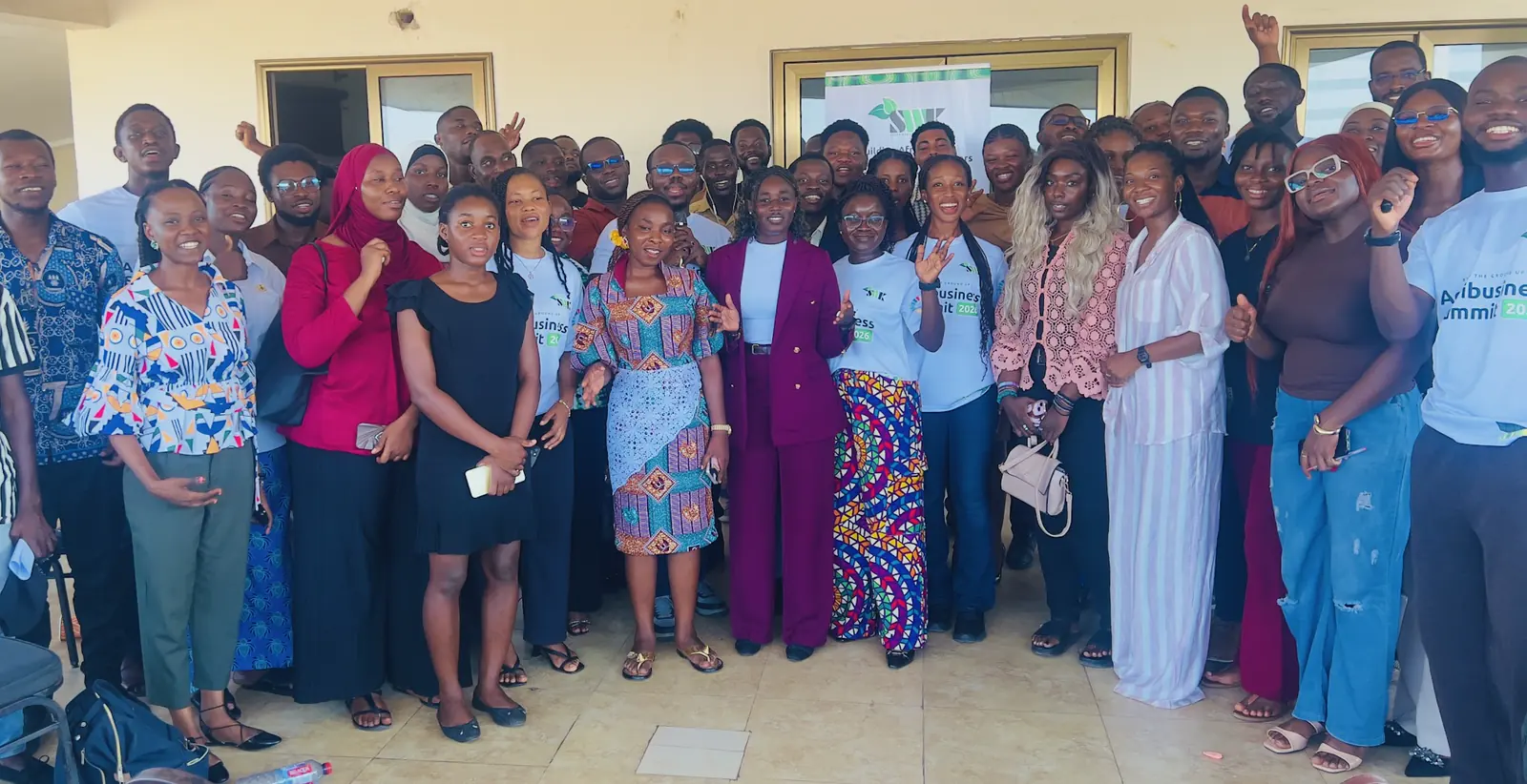
A large group of young people, speakers and volunteers smiling together in front of the SWK Ghana banner at the end of the Summit.
The room at the close of the day, The GracedLife Leadership Centre, Accra.

The Summit in numbers

A first in-person Summit, and a full programme.

138

registrations

62

people in the room on the day

94%

of the 62 aged 35 or under

13

speakers and facilitators

6

partner organisations

11

volunteers

Fifty-eight of the 62 people in the room were aged 35 or under: the registration form gave ages for the participants, and the team confirmed the rest. How we count: 138 registrations came in, 123 online before the day and 15 at the entrance. Sixty-two people were in the room: 35 participants, 12 speakers and facilitators, 6 volunteers, 7 members of the SWK Ghana team, our photographer and one guest. Forty-eight of them were checked in at the door; the other fourteen are counted from the team's own records. One speaker sent a recorded message. Two of the eleven volunteers also spoke on the programme, so they are counted with the speakers.

The day

Five hours, from the first welcome to the pledge.

The programme moved from listening to doing: hear from people in the sector, see what is working in the field, then sit down and map a business of your own.

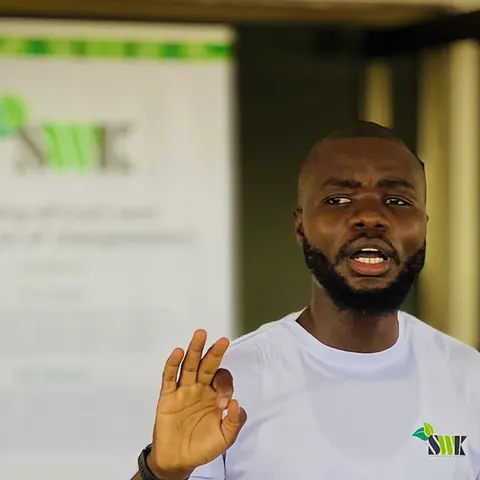
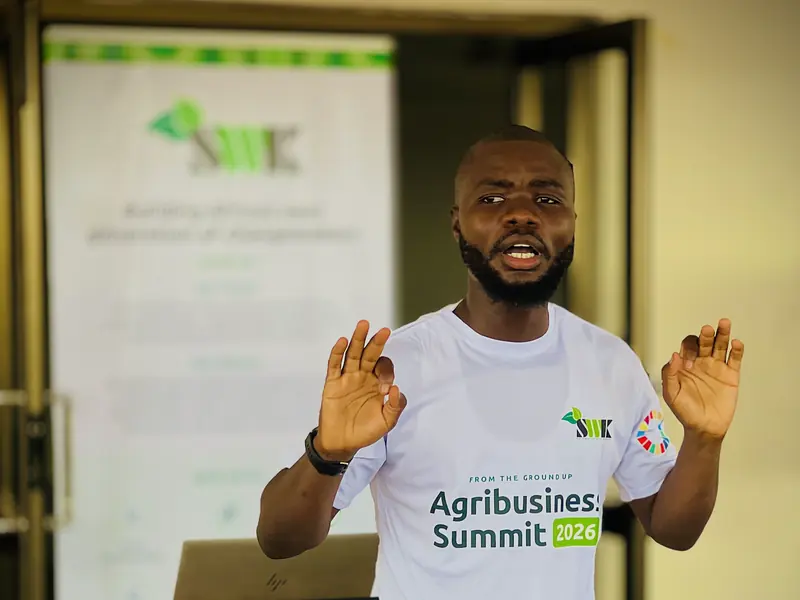
Frank Koomson, Founder of SWK Ghana, gives the welcome address.
Opening

A welcome, and words from our host

With Ben Brown, Co-Founder of SWK Ghana, as MC, the day opened with a welcome address from Frank Koomson, Founder of SWK Ghana, followed by two messages from The GracedLife Leadership Centre, our host and partner.
  • Ben BrownBen BrownCo-Founder, SWK Ghana · MC
  • Frank KoomsonFrank KoomsonFounder, SWK Ghana · welcome address

  • Mr Emmanuel N.K. NuamahMr Emmanuel N.K. NuamahChief Servant, TGLC · goodwill message (recorded)
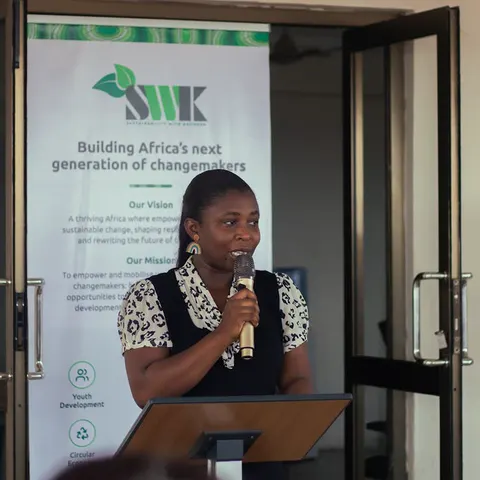
  • Mrs Rachael DansoMrs Rachael DansoSolidarity message on behalf of TGLC
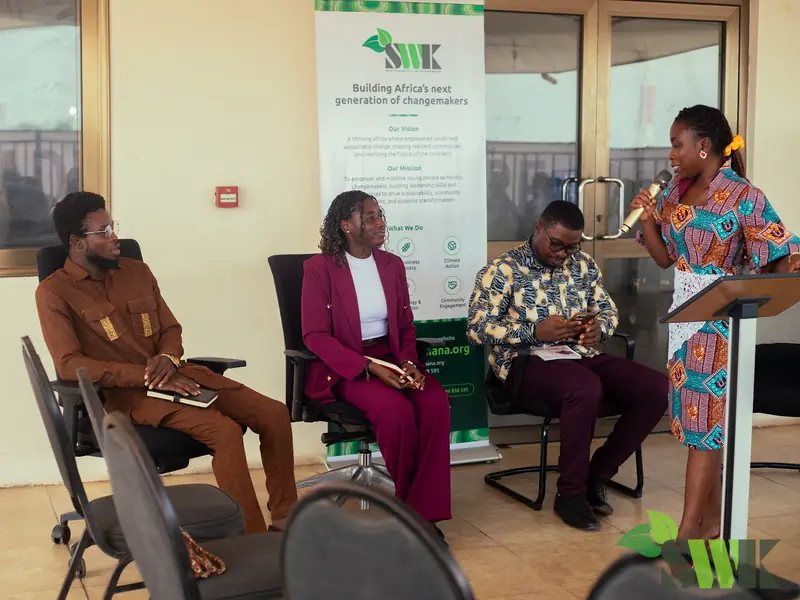
Three panellists seated in front of the SWK Ghana banner while the moderator, standing, puts a question to them.
Panel

Beyond the Farm Gate

Building profitable agribusinesses across the value chain

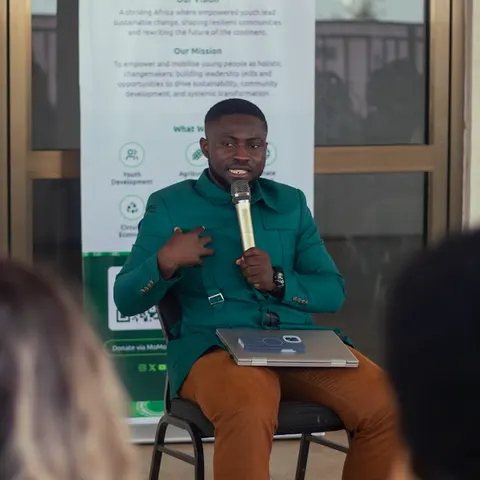
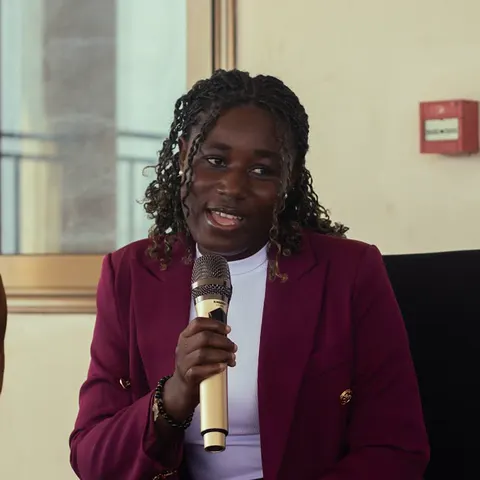
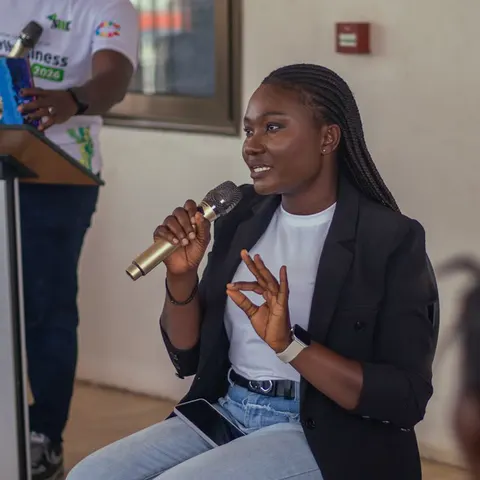
Three founders and practitioners took questions on where the money and the gaps really are: post-harvest loss and logistics, the slow uptake of technology on farms, and the room there is for people who never studied agriculture.

  • Elizabeth Kabukie Ocansey · moderator
  • Wilfred Agbi, Founder and CEO, Calidad Farms Limited
  • Tracey Rama Osman Tia, Agricultural Drone Pilot
  • Richard Yennunam Laarison, Co-founder, Vehlverde Farms
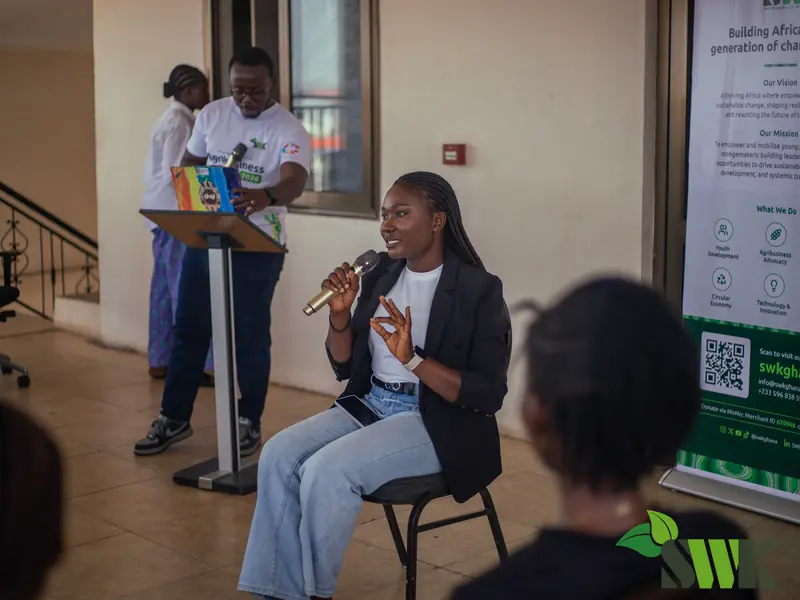
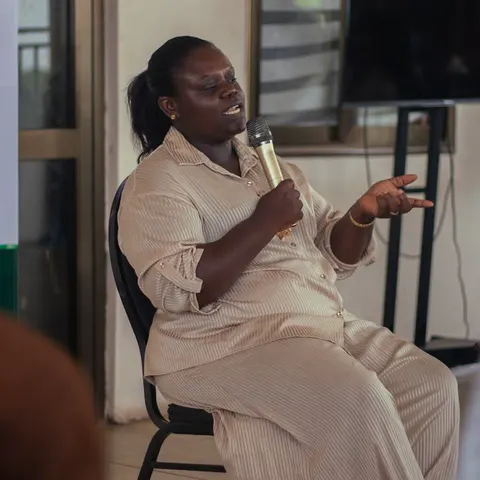
Wendy Dumelo of JERO Foods, seated with a microphone, speaks during the Spotlight Sessions.
Wendy Dumelo, CEO and Co-Founder of JERO Foods, during the Spotlight Sessions.
Spotlight Sessions

Lessons from the Field

Short, practical talks from people doing the work: what they built, what it cost them to learn, and what a young person starting today should know. Spoken word artiste Jovial Hargo Tetteh performed between sessions.

  • Samuel YeboahSamuel YeboahCountry Director, Dream Renewables · solar-powered irrigation
  • Tracey Rama Osman TiaTracey Rama Osman TiaAgricultural Drone Pilot · drones in agriculture
  • Mrs Sheila CorneliusMrs Sheila CorneliusCEO, Lam Naturals; MD, Cornelius Farms · value addition and agri-tourism
  • Wendy DumeloWendy DumeloCEO and Co-Founder, JERO Foods · mushroom farming in Nsawam
  • Jonathan KwartengJonathan KwartengFounder and CEO, Farmer Hut, Ada · tomato and rabbit farming
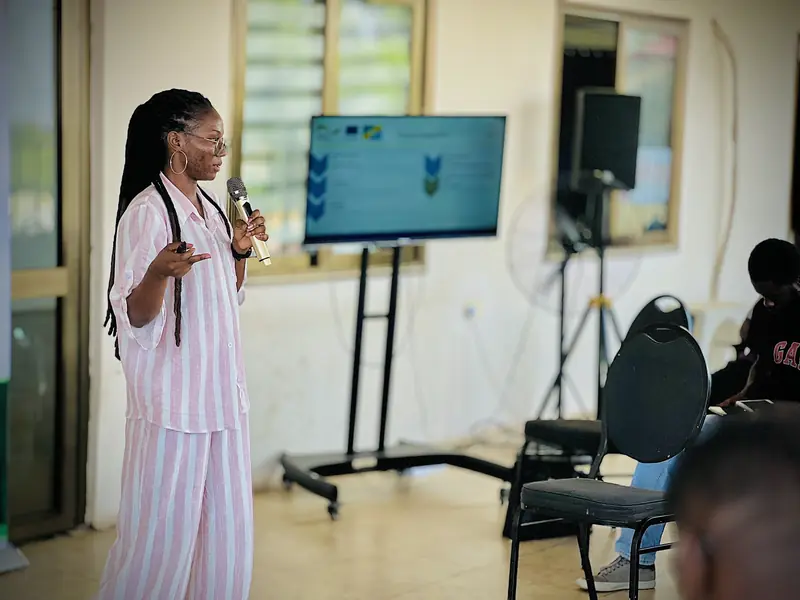
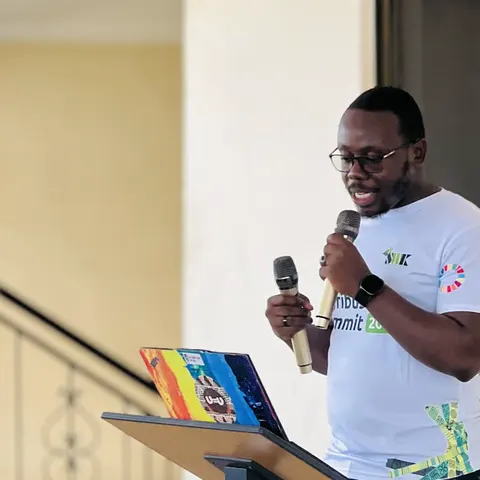
A facilitator stands beside a screen, microphone in hand, presenting to the room.
Workshop

One page, one business: the Agribusiness Model Canvas

Group work, then a demo pitch from each group

Leticia Boateng, Digital Learning Advisor at GIZ's Agri-Business Facility for Africa, introduced the free Agribusiness e-Academy and then led the hands-on part of the day with Ernestina Gyamfi of SWK Ghana. Working in small groups, participants mapped an agribusiness idea on a single page: customers, costs, partners and the first sale. The leader of each group then gave a demo pitch of the group's idea to the room.

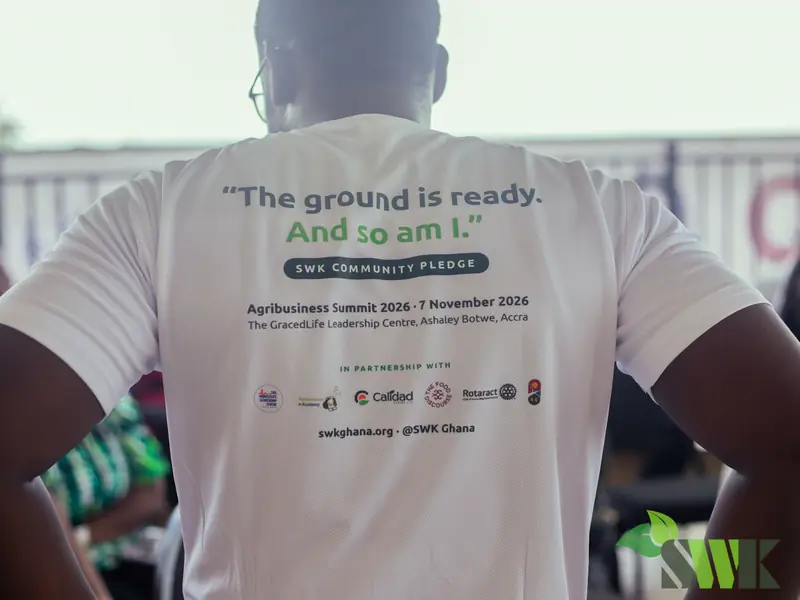
The back of a Summit T-shirt printed with the SWK Community Pledge: The ground is ready. And so am I.
Close

“The ground is ready. And so am I.”

Before leaving, each participant named one next step for their idea or their business. The day ended with the SWK Community Pledge, said together.

Voices from the Summit

What the panel told the room.

The problem Ghana has is not production. It is post-harvest loss and logistics.

Let's get involved in agriculture. Identify your niche, map your skillset, find out what you can do, and contribute your skills.

Wilfred Agbi

Founder and CEO, Calidad Farms Limited · Panellist

One key challenge I have identified is adoption of technology.

In as much as drones make the work easier, most indigenous farmers do not accept the technology. They do not believe that drones can distribute fertiliser evenly to their crops.

Tracey Rama Osman Tia

Agricultural Drone Pilot · Panellist

Let us change our mindset about agriculture and work together from our various sector backgrounds.

You can contribute as an IT expert, a banker, a lawyer, an administrator. It doesn't matter if you do not have an agric background.

Richard Yennunam Laarison

Co-founder, Vehlverde Farms · Panellist

“My next step: start making plans towards my business.”

Barbara, participant

Left the workshop with a completed Canvas, and told us she feels much more confident about starting.

Key takeaways

Five lessons the room heard again and again.

Drawn from notes taken on the day by Lawrencia Owusu, one of our volunteers.

  1. Agribusiness is farming run as a business.

    Production becomes agribusiness when profit and technology are built in.

  2. The technology is ready; uptake is slow.

    Drones, farm-data tools and solar irrigation are available. Many farmers have not adopted them because of a knowledge gap.

  3. Records and readiness unlock funding.

    Farmers who keep no records struggle to get finance. Lenders look for businesses that are business-ready and funding-ready.

  4. The biggest gaps are the biggest openings.

    Post-harvest loss, market linkage and funding were named as the main problems, and each is a business, for example working as an aggregator between farmers and buyers.

  5. Start small and add value.

    Choose a niche, test which products sell fastest, and add value through drying, powders and processing.

Drones in agriculture

Drones apply fertiliser, spray seeds and collect data on farm health. Commercial use needs both drone registration and a pilot licence.

Tracey Rama Osman Tia

Solar-powered irrigation

Have an expert assess your needs before investing. Shared irrigation lowers the cost for each farmer, and where you farm matters: land from illegal mining can contaminate crops.

Dream Renewables

Value addition and agri-tourism

Keep records, because no records means no funding. Dried fruit and processed products pay, and farm stays are a growing idea.

Cornelius Farms

Mushroom farming

Ghana's climate suits oyster mushrooms. Mushroom powder, dried mushrooms and mushroom bread are in demand.

JERO Foods

Choose your niche

Production, processing or selling: pick one, start small, and build skills in data. Volunteer to gain experience and keep an opportunity tracker.

The panel

One page, one business

Every business needs a Business Model Canvas, and each part of the canvas feeds the others. Value chains discussed included cashew, cocoa, maize and livestock.

Agribusiness e-Academy

Who was in the room

Young, mixed, and already doing something.

What the 35 participants told us when they registered. They are students, workers and business owners, and nearly half already run a venture. Speakers, volunteers and the team are not included here.

What they do now

35 participants

  • Students11
  • Employed11
  • Self-employed7
  • Running a business4
  • Looking for work2

What they came for

35 participants; they could choose more than one

  • Business ideas24
  • Networking23
  • Practical skills20
  • Mentorship16
  • Market linkages16
  • Funding15

Where their interest lies

Main area of interest, 35 participants

  • Crop production9
  • Marketing, sales and export8
  • Agri-tech6
  • Finance and investment4
  • Livestock and poultry3
  • Agro-processing3
  • Other2

40% women

14 women and 21 men took part as participants.

94% aged 18 to 35

32 of the 34 participants who gave their age. The median age was 26.

16 run a venture

Nearly half of participants already have a business or project of their own.

Of all 138 registrations, 52 were from women and 124 of the 136 who gave their age were 18 to 35; 60 said they already work in agribusiness.

In photos

The day, as it looked.

What we learned

Three things we are taking into the next one.

A first event teaches more than it proves. This is what we will keep and what we will change.

01

The demand is there

138 registrations came in for a first in-person Summit, 60 of them from people already working in agribusiness, and six more young people signed up at the door on the day. Young people are looking for this.

02

Registering is not arriving

Of the 123 people who registered online, 33 checked in on the day. Next time we will confirm seats in the final week, share travel directions earlier, and plan for the people who walk in.

03

Guard the clock, and the follow-up

Early feedback rated the speakers and content highly and asked us to keep better time. Sixteen participants came hoping for mentorship, so we have opened mentorship requests with our speakers.

What is next

The Summit crowned Phase 1. Phase 2 is mentorship.

Five agribusiness webinars of sensitisation and education, crowned by this Summit: that was Phase 1 of our agribusiness journey. Phase 2 is the SWK Agribusiness Mentorship Programme 2027: six months learning from people who run agribusinesses, then taking first steps.

About the Mentorship Programme 2027

Four ways to keep going, whether you were in the room or not.

Our partners

Six organisations made the day possible.

They gave a venue, speakers, learning content and hands. Thank you.

The GracedLife Leadership Centre

Host and venue partner

Agribusiness e-Academy

Agri-Business Facility for Africa, GIZ

Calidad Farms Limited

The Food Discourse

Rotaract Club of Accra Ring Road Central

Dream Renewables

Help us do it again

The Summit was free for every young person. Help keep it that way.

SWK Ghana is a youth-focused nonprofit. Gifts and partnerships pay for the venue, materials, and the follow-up that turns one good day into a business that lasts: mentorship, training and community.

Fund a programme

Sponsor the next Summit, a training cohort or the mentorship programme. We report back with numbers like the ones on this page.

Bring your organisation

Speakers, farm visits, learning content, a venue, or opportunities for the young people in our network.

Give what you can

Card, mobile money or MoMo Pay at swkghana.org/give. We issue a receipt for every gift.