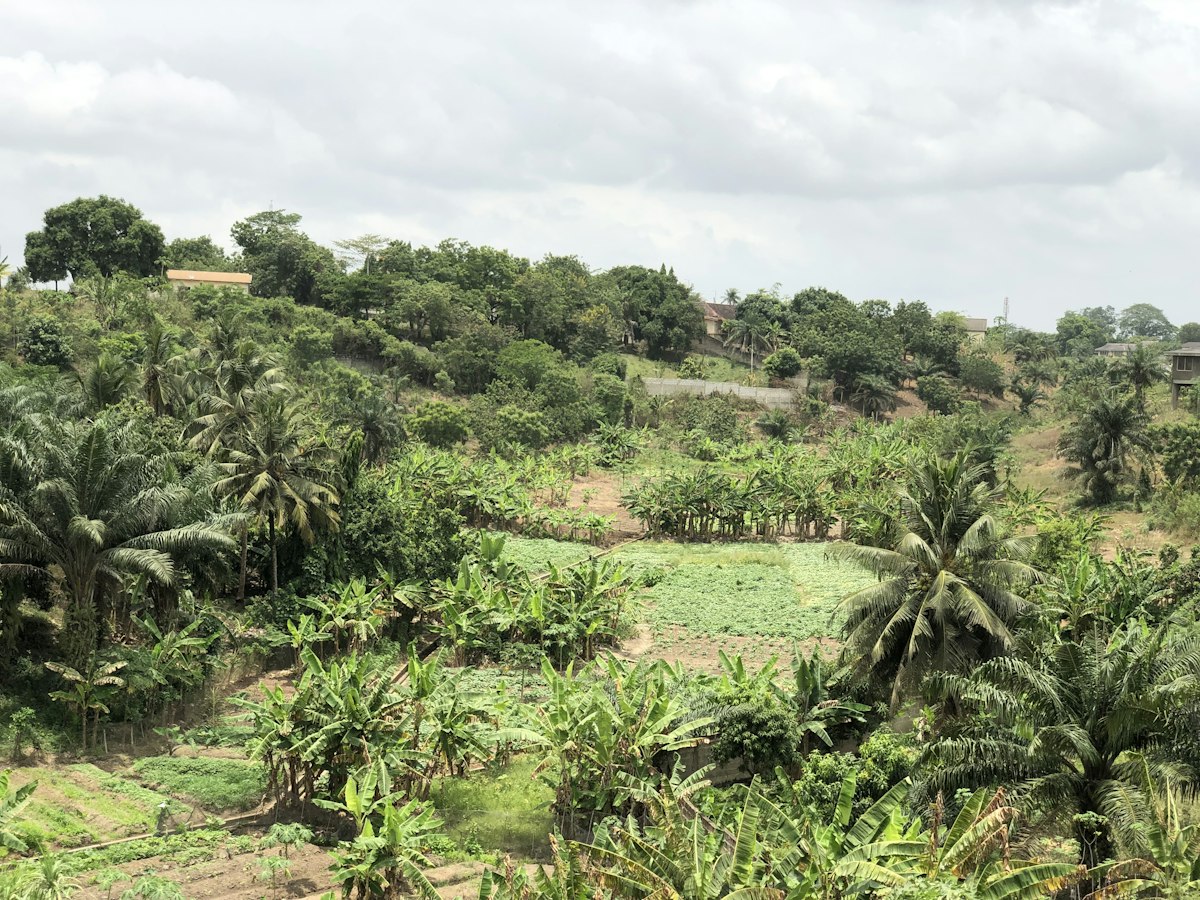
Ghana's agricultural sector is the foundation of its economy. It contributes approximately 20% of GDP, employs roughly 32% of the national workforce, and accounts for more than 40% of the country's export earnings (Ghana Statistical Service [GSS], 2024). Approximately 75% of Ghana's rural population depends on the sector for their livelihoods (GSS, 2021). These are not marginal figures. Agriculture is not a peripheral activity in Ghana; it is the structural backbone of the country's economy and the primary livelihood of its rural majority.
And that backbone is aging. According to field research cited in multiple studies on Ghanaian agricultural labour, the average age of a Ghanaian farmer is 55 years (World Bank, 2022). Ghana's national life expectancy is approximately 60 years (GSS, 2021). If those two figures are placed side by side, the implication becomes stark: a significant proportion of Ghana's active farming population is within a decade of their expected lifespan, with no clear successor generation prepared to take their place.
The Numbers Behind the Crisis
Ghana's agricultural land area covers approximately 57% of the country's total land surface, but only about 24% is under active cultivation (World Bank, 2023). The gap between available land and cultivated land represents an enormous untapped potential, but that potential cannot be realised without people to farm it: people who are not currently being recruited, trained, or supported to take up agricultural work.
Ghana's agriculture employment share has declined sharply, from 53.9% of the total workforce in 2007 to 29.8% in 2019, according to World Bank World Development Indicators (World Bank, 2023). In itself, agricultural labour share declining as an economy develops is normal. But the pace of the shift, combined with the aging of remaining farmers, creates a structural mismatch: Ghana's food production capacity could deteriorate faster than its economy is able to replace the food security that agriculture currently provides.
Low Productivity Compounds the Problem
Ghana's agricultural sector is not only aging; it is underperforming relative to its potential. The sector is characterised by low productivity, smallholder fragmentation, high post-harvest losses estimated at 30 to 40% for many crops, weak market linkages, and persistent underinvestment in mechanisation and value addition (FAO, 2024). Older farmers are less likely to adopt new technologies, climate-smart practices, or digital tools. They are less able to access markets effectively and less likely to transform subsistence farming into commercial agribusiness ventures.
This creates a compounding effect: not only are Ghana's farmers aging, but the farming methods being practised by the remaining agricultural workforce are often not those that will be needed to achieve food security in a changing climate and a growing country.
What Happens When They Retire?
The question at the centre of Ghana's agricultural succession crisis is straightforward: when the current generation of 55-year-old farmers retires or passes on, who will replace them?
Currently, the answer is not clear. Ghana's young people are not entering agriculture in sufficient numbers. They are moving to cities. They are completing secondary and tertiary education that positions them for formal employment. They are building identities and aspirations that do not include farming. Ghana's government has acknowledged this explicitly in its own policy discourse, recognising that young people's disinterest in agricultural employment is a key factor behind the sector's demographic crisis (Government of Ghana, 2025).
Ghana's Policy Response: Ambition and Implementation
Ghana's government has articulated ambitious agricultural policies. The Feed Ghana Programme, launched in April 2025, aims to make the country self-sufficient in key staple commodities by 2028 (Government of Ghana, 2025). The 2026 Budget allocated GHS 100 million to aquaculture and includes rural electrification investments designed to strengthen agribusiness corridors (Ministry of Finance, Ghana, 2025). GIRSAL, the Ghana Incentive-Based Risk Sharing for Agricultural Lending, is working to de-risk agricultural loans for young farmers. The National Entrepreneurship and Innovation Plan provides startup support and pitch competitions for young agribusiness entrepreneurs.
These are meaningful commitments. But analysts consistently note the gap between policy ambition and implementation. Skills training systems do not reliably produce graduates with industry-ready competencies for modern farm operations. Financial products designed for young farmers without collateral remain scarce. The cultural repositioning of agriculture as a modern, viable, and prestigious career has not yet happened at scale.
The Window to Act
The generational transfer of Ghana's agricultural workforce does not have to be a crisis. It can be an opportunity, if it is managed proactively. The farmers who are approaching retirement age possess irreplaceable knowledge about Ghanaian soils, crops, seasons, and markets. That knowledge can be transferred, documented, and combined with the technologies and skills that younger generations bring. But that transfer requires deliberate investment, and it requires it soon.
The 55-year-old farmer problem is a ticking clock. But clocks can be read, and when you know what time it is, you can decide to act before the alarm goes off.
References
- Food and Agriculture Organization of the United Nations. (2024). The state of food and agriculture 2024. FAO. https://doi.org/10.4060/cd0388en
- Ghana Statistical Service. (2021). Ghana 2021 Population and Housing Census: General report volume 3A. GSS.
- Ghana Statistical Service. (2024). Quarterly gross domestic product: Third quarter 2024. GSS.
- Government of Ghana. (2025). Feed Ghana programme: Framework and implementation plan. Ministry of Food and Agriculture.
- Ministry of Finance, Ghana. (2025). The budget statement and economic policy of the Government of Ghana for the 2026 financial year. Ministry of Finance.
- World Bank. (2022). Ghana agricultural sector review: Building a resilient and inclusive agrifood system. World Bank Group.
- World Bank. (2023). Employment in agriculture (% of total employment). World Development Indicators. https://data.worldbank.org/indicator/SL.AGR.EMPL.ZS